Recovery · Odesa
Recovery after injury or sport: getting movement back
The cast is off, the doctor says it's healed, but the joint still doesn't move like before? Or every hard week of training leaves you aching?
After an injury tissue heals, but movement, strength and confidence don't always come back on their own. After hard training, muscles need time and help to recover. Gradual loading, hands-on work and device-based methods help you return to normal life and sport more comfortably.
- Who comes
- After sprains, fractures, overload
- Often helps
- Manual therapy, shockwave, EMTT, massage
- Typical course
- 4–8 sessions
- Start
- After the doctor's clearance
- 20+ years of practice
- STORZ MEDICAL devices, Switzerland
- 5.0 on Google Maps
Causes
Why movement doesn't come back on its own
While an injury heals, the body protects it: muscles tighten, the joint moves less, we start moving differently. These protective habits often stay after healing.
Stiffness after immobilisation
Weeks in a cast or brace stiffen the joint and weaken the muscles.
Scar tissue
It's less elastic than healthy tissue and needs gradual loading.
Compensation
We limp or spare one side, and the other side gets overloaded.
Too much, too soon
Returning to sport at full volume is the most common cause of a new injury.
Overload without injury
Tendons and muscles that don't have time to recover between sessions.
At home
What you can do yourself
Load gradually, sleep enough and listen to your body; mild discomfort is fine, sharp pain is a signal to step back.
- 1
Move within comfort
Daily range-of-motion exercises your doctor allows.
- 2
The 10% rule
Increase training volume by about 10% a week, no more.
- 3
Sleep and food
Recovery happens at night; enough protein helps tissue rebuild.
- 4
Rest days
At least 1–2 easy days a week, especially after a hard session.
- 5
Pain diary
Note how you feel the next morning; that's the best guide for load.
Red flags
When to see a doctor straight away
Our work starts after the doctor. See one first if:
- A fresh injury: severe pain, swelling, deformity, you can't put weight on the limb
- You suspect a fracture, dislocation or tendon rupture
- Numbness, cold or pale fingers or toes
- Calf pain and swelling after a cast or surgery (risk of thrombosis) — same day
- Pain and swelling that get worse instead of better
How we help
How we help
We assess how you move now, bring back mobility by hand, support tissue recovery with devices and plan a safe return to load.
- 1
Assessment
Your injury history, doctor's reports and scans, how the joint and the whole body move.
- 2
Manual therapy and osteopathy
We restore movement in the joint and in the areas that compensated.
- 3
Shockwave and EMTT
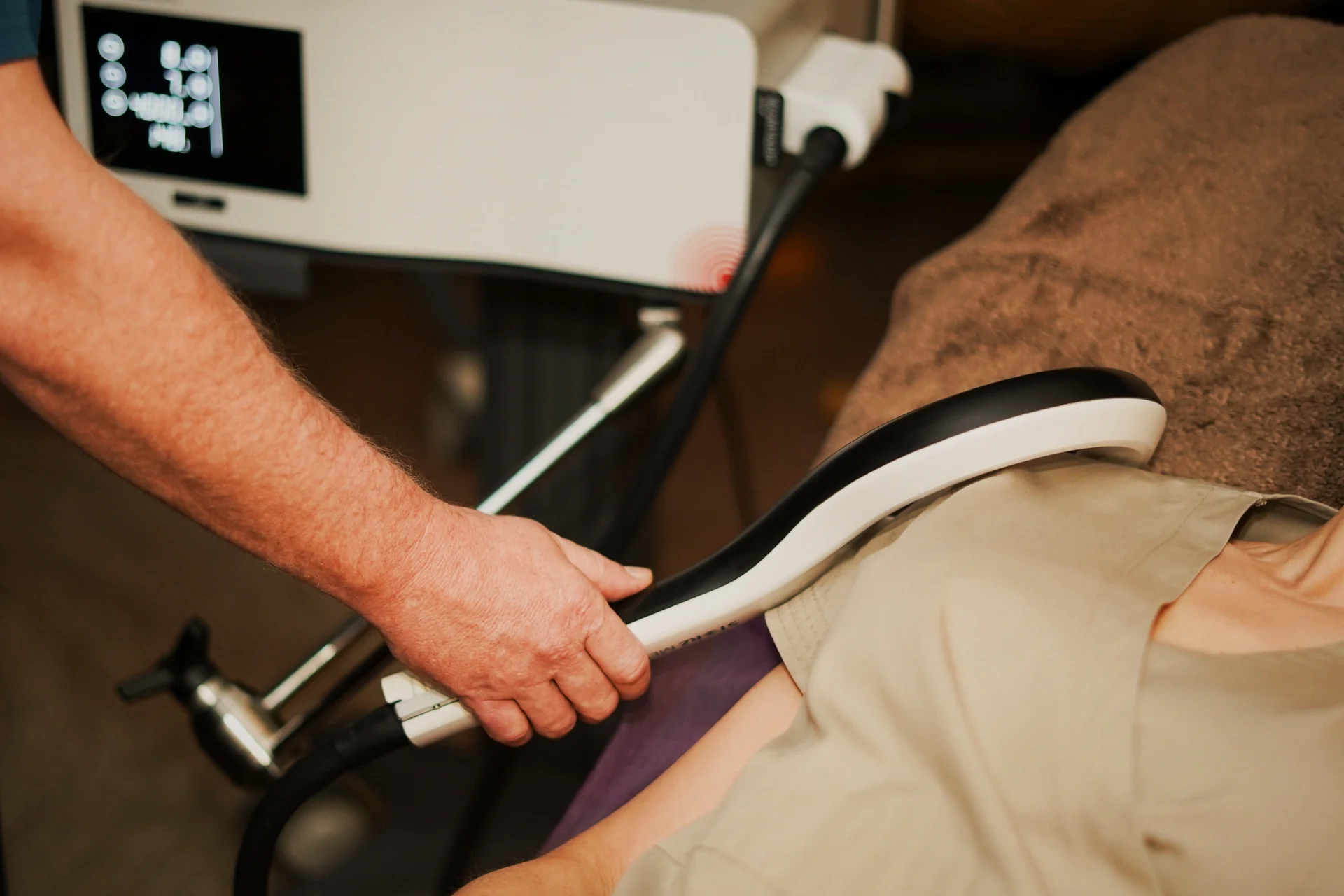
For painful tendons, slow-healing areas and long-lasting pain: STORZ MEDICAL devices.
- 4
Massage and plan
Recovery massage for overloaded muscles, plus a step-by-step return to sport.
What we use and why
- By handOsteopathy and manual therapyBack or neck pain nobody has explained? Careful hands-on work and a plan that makes sense.About the method
- STORZ MEDICAL · SwitzerlandShockwave therapyHeel, shoulder or knee pain that's lasted months? STORZ acoustic pulses, right where the tendon is overloaded. 20 minutes.About the method
- STORZ MEDICAL · SwitzerlandEMTT magnetotransduction therapyChronic pain in the lower back, joints and tendons. Through your clothes, painless, 20 minutes.About the method
- By handTherapeutic massageNeck and shoulders locked up from the laptop, back tired from sitting? An hour of attentive hands-on work.About the method
Course
How many sessions you may need
Often 4–8 sessions over 1–2 months, depending on the injury and your goals.
We coordinate with your doctor's recommendations and check progress every 2–3 sessions.
For athletes we can plan regular recovery sessions during the season.
Prices
First visit · comprehensive therapyStart here
Conversation, assessment and a first session on a personal programme: osteopathic and manual techniques, therapeutic massage
Osteopathy / manual therapy
Session on your plan: work with pain and the problem area
Therapeutic massage
Therapeutic or sports recovery: back, neck or full body
STORZ shockwave therapy
Standard treatment · 0.20 UAH per pulse
EMTT STORZ MEDICAL
Standard treatment · 0.10 UAH per pulse
We'll confirm your programme and course price after the first visit. All prices
Research
What research says
Research supports massage as one of the effective tools for recovery after exercise.
Meta-analysis · 2018
A meta-analysis of 99 studies on recovery after exercise: massage was among the most effective methods for reducing delayed-onset muscle soreness and perceived fatigue.
Dupuy O, Douzi W, Theurot D, et al. An evidence-based approach for choosing post-exercise recovery techniques to reduce markers of muscle damage, soreness, fatigue, and inflammation: a systematic review with meta-analysis. Frontiers in Physiology, 2018.
Meta-analysis · 2020
A meta-analysis: sports massage improved flexibility and reduced delayed-onset muscle soreness.
Davis HL, Alabed S, Chico TJA Effect of sports massage on performance and recovery: a systematic review and meta-analysis. BMJ Open Sport & Exercise Medicine, 2020.
We summarise the findings in our own words. Studies describe results in groups of people; your plan is always built around you.
Questions
What people usually ask
When can I start after an injury?
After your doctor confirms that the tissue has healed enough, or has allowed rehabilitation. Bring their report.
Can you help after surgery?
Often yes, at the stage when your surgeon allows it. We'll follow their protocol.
I'm not injured, just overloaded. Is that for you?
Yes. Recovery massage and work on overloaded tendons help many people train more comfortably.
Will it hurt?
Most work is comfortable. Shockwave therapy is noticeable; we adjust the intensity.
Do you work with children and teenagers in sport?
Tell us the age and situation when booking; we'll advise whether we can help.
Booking
Let's find a time that suits you
Message or call us and our administrator will reply during opening hours. Not sure what you need? Start with a first visit: we assess first, then choose the method together.
- Address
- 9 Frantsuzkyi Blvd, office 47 (2nd floor), Odesa, Ukraine
- Opening hours
- Mon–Sat 8:00–20:00 (last booking), Sun by appointment
- @osteopathic_ua
Related concerns
People with this often also ask about
- Shoulder painCan't lift your arm all the way, pain at night? Common causes and how shockwave and EMTT help.Read more
- Knee painKnees ache on the stairs, the joint bends less than it used to? What helps besides pills.Read more
- Lower back painAches after sitting, hard to straighten up in the morning? Why it happens and what helps.Read more